
Technology
Smart Home Technology and Connected Devices
A smart home connects lights, climate controls, sensors and appliances through a local network or hub.
Read the guide →Thirty focused guides across technology, computing and artificial intelligence.
A smart home connects lights, climate controls, sensors and appliances through a local network or hub.
Read the guide →
A useful smartphone upgrade depends on battery endurance, software support and the features that match your habits.
Read the guide →
Wearables turn small sensors and timely alerts into everyday health and convenience tools.
Read the guide →
The best gadget is the one that solves a specific task reliably within your existing setup.
Read the guide →
New technologies matter when they solve ordinary problems at a sensible cost and with manageable tradeoffs.
Read the guide →
The Internet of Things links physical devices to software for monitoring, automation and remote control.
Read the guide →
A credible technology forecast separates demonstrated capabilities from prototypes and marketing claims.
Read the guide →
Display choice depends on the room, content, brightness and tolerance for tradeoffs in contrast and price.
Read the guide →
Wireless performance depends on spectrum, distance, interference, hardware and network configuration.
Read the guide →
Useful productivity technology removes friction from real workflows without creating another system to maintain.
Read the guide →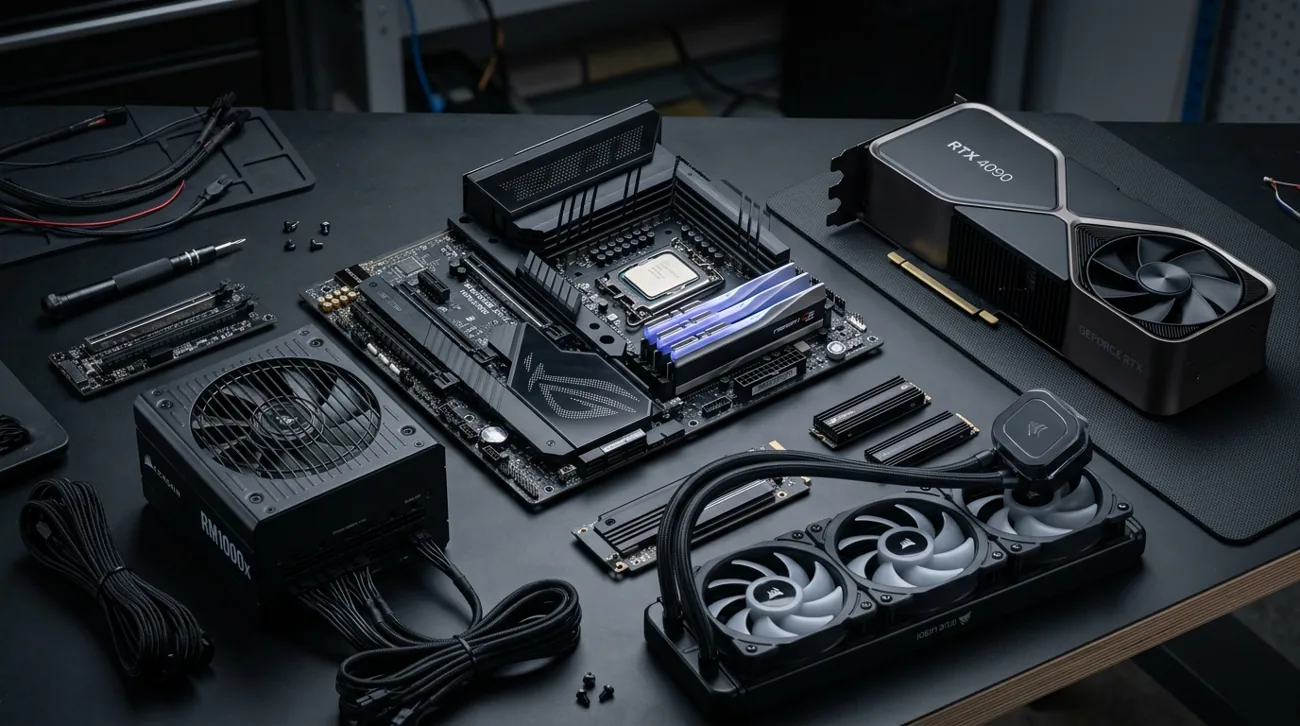
A balanced computer matches processor, memory, graphics and storage to a real workload.
Read the guide →
Laptop buying begins with mobility, performance needs and the tradeoffs in screen, battery and repairability.
Read the guide →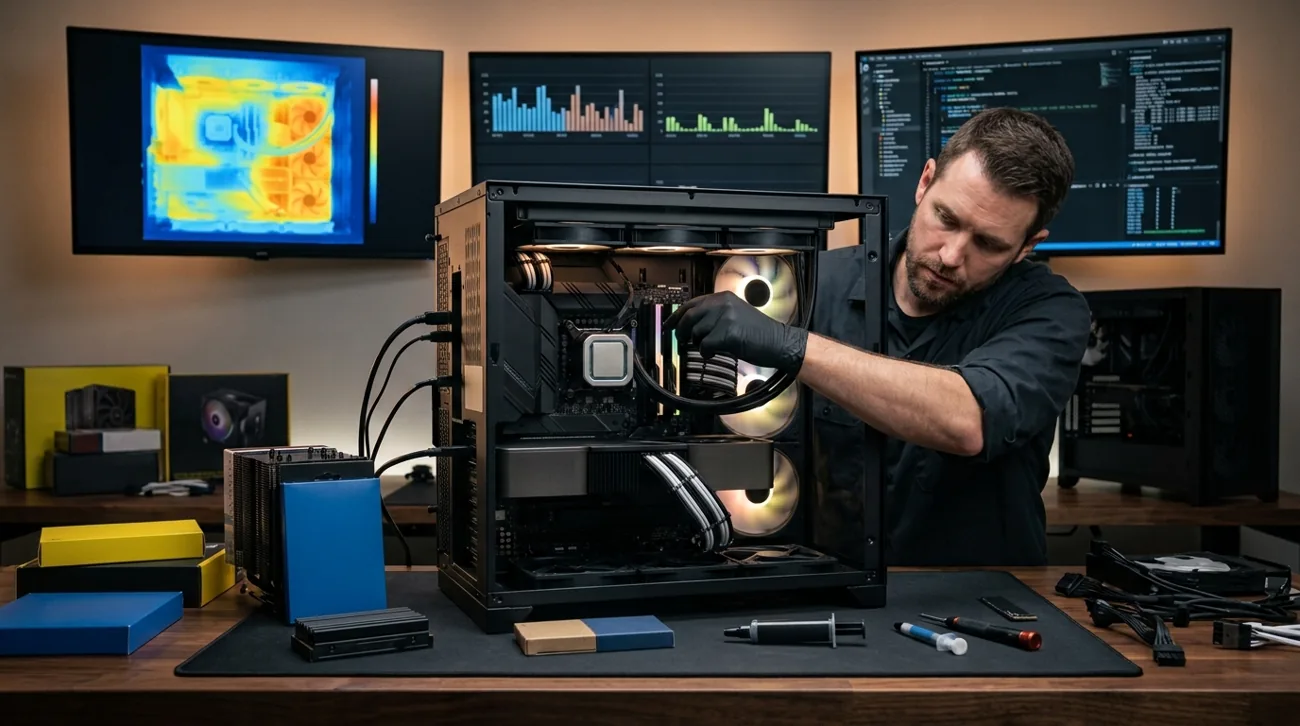
Processor comparisons work best when architecture, power budget and software compatibility are considered together.
Read the guide →
A graphics processor accelerates rendering, media work and some compute tasks, but its value depends on software and display goals.
Read the guide →
Storage choices affect responsiveness, capacity, durability and the design of a dependable backup plan.
Read the guide →
An operating system is the layer that manages hardware, software, accounts and security updates.
Read the guide →
A home or office network succeeds when devices can connect securely and reliably where people work.
Read the guide →
Cloud services rent computing resources, storage and managed tools on demand, with costs that need active oversight.
Read the guide →
Faster computing starts with measuring the bottleneck before buying replacement parts.
Read the guide →
Practical computer security combines updates, account protection and recoverable copies of important files.
Read the guide →
Generative AI predicts and constructs new text, images and other outputs from patterns learned during training.
Read the guide →
AI tools can draft, summarize and organize work when their outputs are checked against source material.
Read the guide →
AI-assisted development can speed up small tasks but still requires testing, code review and clear ownership.
Read the guide →
Machine learning uses data to learn patterns that can support predictions and decisions on new examples.
Read the guide →
Chatbots are conversational interfaces that can answer questions or carry out bounded tasks with suitable safeguards.
Read the guide →
Creative AI tools generate media from prompts or references, introducing new editing possibilities and rights questions.
Read the guide →
Business automation works best when a defined repetitive process has clear inputs, owners and exceptions.
Read the guide →
On-device AI features can improve everyday interactions when they respect battery limits and user privacy.
Read the guide →
The future of AI will be shaped as much by reliability and deployment constraints as by model capability.
Read the guide →
Responsible AI starts with protecting data, testing outputs and defining when a human must decide.
Read the guide →